

1. Előzmény
A BKV nagykörúti villamos modernizáció során Siemens Combino típusú villamosszerelvényeket helyezett üzembe, melyek működtetéséhez nagyobb keresztmetszetű munkavezeték szükséges. A munkavezeték csere után bekövetkezett oszlopdöntések alapján nyilvánvalóvá vált, hogy a régi oszlopok egy része olyan korróziót szenvedtek el az elmúlt évek során, hogy a nehezebb munkavezeték terhelését, valamint annak belengéséből adódó dinamikus erőhatását már nem bírják. Mivel viszont nem minden oszlop korrodált el és még gazdaságilag sem kivitelezhető az összes oszlop egyidejű cseréje, fontos az oszlopok állapotát felmérni és a szükségesség sorrendjében kicserélni. Ehhez olyan vizsgálati módszer szükséges, amellyel az oszlopok állapota roncsolás-mentesen és egyértelműen felmérhető. A következőkben egy ilyen módszert mutatunk be.
2.1. Az elméleti háttér - a szilárdtestek fizikája
Minden szilárd test több irányban különböző frekvenciájú rezgések végzésére képes. A legnagyobb kilengéseket a testspecifikus sajátfrekvencián tapasztalhatjuk, mivel e frekvencián „rezonál” a test az adott irányban (innen eredt a rezonanciafrekvencia fogalma). Természetes, hogy egyetlen test sem kezd el magától rezgéseket végezni. Mindehhez gerjesztés – tehát külső erők hatása – szükséges. Minél nagyobb ez az erő és – alternáló erők esetében – minél pontosabban a test sajátfrekvenciájával egyezve lép föl, annál nagyobb rezgéseket végez a szilárdtest (az erőhatás által előidézett irányban). Ha szabadon mozoghat, akkor ezt a rezgést a sajátfrekvenciáján végzi, de ha pl. az állandó erőhatás miatt szabad mozgásra nincs módja, akkor az erőhatás által kikényszerített frekvencián fog rezegni. Ennek megértéséhez hasonlítsuk ezt a fizikai tényt egy harang vibrációjához. A harangnak „természetes” hangja van, amelyen megszólal ütögetés esetén. A hang aktuális frekvenciája a harang merevségétől (tehát anyagától, formájától és falvastagságától), valamint a megmozgatott tömegétől (méretétől) függ. Ez a frekvencia a harang sajátfrekvenciája ill. rezonanciafrekvenciája. Arról is könnyen meggyőzödhetünk, hogy ez egy irányfüggő tulajdonság: ha nem a „szokásos” irányban kongatjuk meg a harangot, gyenge és „hamis” hangja lesz vagy szinte nem is szól.
2.2. Mechanikus szerkezetek rezonanciája
A mechanikus struktúrák különböző frekvenciákon más-más merevséget mutatnak. Azokon a frekvenciákon, amelyeken kicsi a szerkezet merevsége (tehát nagy a rezgéshajlama), már akár nagyon kis erők is képesek a szerkezetet erős lengésbe (rezgésbe) hozni. E frekvenciákat rezonanciafrekvenciáknak, a körülvevő frekvenciatartományt pedig rezonanciatartománynak nevezzük. Azt a frekvenciatartományt, amelyben viszont a szerkezetet kifejezetten nagy merevség jellemzi, antirezonanciás tartománynak hívjuk. Ha tehát egy gerjesztő erő frekvenciája a rezonanciatartományba esik, akkor nagy rezgések keletkeznek. Ha a gerjesztés frekvenciája viszont antirezonanciás frekvenciatartományba esik, akkor akár az is előfordulhat, hogy semmilyen rezgés nem keletkezik a gerjesztett anyagban. További fontos paraméter a rezonancia csillapítása. A csillapítás annak a mértékegysége, hogy egyszeri gerjesztés által előidézett rezonanciarezgés milyen gyorsan cseng le. A kemény anyagok (például üveg, acél, sárgaréz) általában kis csillapításúak, a gerjesztés után még sokáig rezegnek (ennek példája a mindennapi életben a harang és a xilofon). Az ilyen rezonanciák frekvenciatartománya általában nagyon szűk, és jellemző rá a magas, határozott amplitúdókiemelkedés. A lágy és plasztikus (rugalmas, puha) anyagok (például gumi, fa) nagy csillapítással bírnak. Ezeknél az anyagoknál többnyire nagyon széles frekvenciájú rezonanciatartományt találunk, amelynek amplitúdókiemelkedései nem olyan határozottak.
2.3. A felsővezeték tartó oszlopok tulajdonságai
A tartóoszlopok természetesen - mint mechanikai szerkezet - rezonanciafrekvenciával rendelkeznek. Annak frekvenciája a tartóoszlop szerkezeti kialakításától, terhelésétől (a felső vezeték által gyakorolt feszítőerőtől), valamint állapotától (falvastagságától) függ. Feltételezzük egyforma oszlopszerkezeteket és állandó - azonos - terhelést, a tartóoszlopok rezonancia már csak az oszlop állapotától függ. Megfelelő állapotú referenciaoszlopok rezonanciatulajdonságával összehasonlítva tehát az elkorrodált oszlopok rezonanciaméréssel kiszűrhetők.
3.1. A tartóoszlopok állapotának meghatározásának alapja
Az előzőek alapján tudjuk, hogy a rezonanciák frekvenciatartománya az anyagoktól és a szerkezet kialakításától függ. Ha csupán egy-egy oszloptípusra koncentráljuk, akkor - egyforma gyártási eljárás és kis gyártási tűrést feltételezve - abból indulhatunk ki, hogy az épp (újszerű) tartóoszlop nagy merevséggel rendelkezik és ezért magas frekvenciájú rezonanciával rendelkezik. A korrodált tartóoszlop falvastagsága pedig csökkent, így a szerkezet merevsége kisebb lett és ennek következményeként alacsonyabb sajátfrekvenciával rendelkezik. A tárgyalt vizsgálati módszer lényege pont ez: minél előrehaladtabb a tartóoszlop korrodálása, annál kisebb falvastagsággal és merevséggel rendelkezik, ez pedig a sajátfrekvencia alacsonyabb frekvenciája alapján kimutatható. Csupán kísérletekkel kell meghatározni, milyen frekvenciatartományban található a jó állapotú oszlopok sajátfrekvenciája, valamint milyen értékre csökken ugyanezek oszlopok rezonanciafrekvenciája elfogadhatatlan korrózió esetén.
3.2. A tartóoszlopok állapotának meghatározásának vizsgálati módszere
A legegyszerűbb rezonanciateszt az ütésteszt, melynek lényege, hogy egyszeri ütéssel gerjesztjük az oszlopszerkezetet, és rögzítjük az ütésre keletkező rezgések spektrumát. A rezonanciafrekvenciák a spektrumban található kiemelkedések (amplitúdóhegyek) formájában láthatóvá válnak. Az antirezonanciás tartományok viszont völgyekként jelennek meg. A kiemelkedések és a völgyszerű tartományok szélessége jól jellemzi a csillapítást. Hogy melyik frekvenciatartományt lehet ütéssel gerjeszteni, az az ütésimpulzus τ időtartamától függ. Az 1/τ frekvenciatartományban az ütés által a szerkezetbe juttatott energia 90%-a rezgésgerjesztésként hat. Emiatt a puha (tompa), például gumikalapáccsal kifejtett ütések csak néhány 100 Hz-ig képesek gerjeszteni, a rövid (kemény) ütések (például vaskalapáccsal) pedig akár több kHz-es frekvenciatartományban is rezgéseket gerjesztenek. Mivel a tartóoszlopok nagy szerkezetnek számítanak és inkább puha - kis merevségű - viselkedésűek, a "gumikalapácsos" gerjesztés alkalmazhatónak tűnik. Ahhoz, hogy egyforma erővel történjen az oszlopok gerjesztése, egy - a vizsgálandó oszlopra ideiglenesen felcsatolandó - karos segédszerkezet alkalmazását javasoljuk. Nem kizárható az sem, hogy a vizsgálandó oszlop mellett elhaladó villamosok által okozott oszlopterhelés is felhasználható a rezonanciavizsgálat elvégzésére. (Ezt kísérlettel kell kideríteni.)
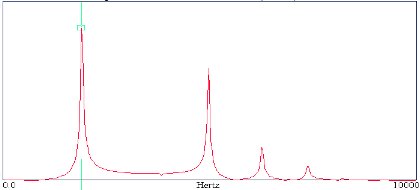 |
| Ábra: négy rezonanciafrekvenciát kimutató, ütésteszttel rögzített spektrum |
3.3. A tartóoszlopok állapotvizsgálat várható eredménye
Az oszlopszerkezetek várhatóan típustól függően igen eltérő rezonanciafrekvenciát mutatnak. Ezért a vizsgálat mindig csak egy-egy típushoz tartozó oszlopok összehasonlítása alapján alkalmazható. Minden egyes típusra nézve viszont várható, hogy a korróziós állapottól függően erősen eltérő rezonanciafrekvenciák lépnek fel, így egyértelműen megkülönböztethetők a jó és rossz állapotú oszlopok. A döntéshozatalhoz szükséges határokat kísérlettel meghatározandók külön-külön minden egyes típusra.
4. Összefoglaló
A fentiekben bemutatott vizsgálati módszer roncsolásmentes, gyors és igen költséghatékony. Ugyanis a vizsgálathoz szükséges eszközök (kétcsatornás rezgésanalizátor rezgésérzékelőkkel, gerjesztő kalapácsszerkezet) összköltsége nem haladja meg a 4 millió forintot. Maga a vizsgálat pedig várhatóan kevesebb mint 10 percet vesz majd igénybe oszloponként, ezért nagyon sok oszlop vizsgálható be rövid időn belül. Az eredmények pedig eltárolhatók és későbbi vizsgálatoknál felhasználhatók - sőt, arra is van mód, hogy ún. trendekben kimutassuk az oszlopok állapotromlás előrehaladásának sebességét. Megjegyzés: A leírt módszer a PIM Professzionális Ipari Méréstechnika Kft. a saját szellemi termékének tekinti, ezért szerzői jog védelmét élvez.
Rahne Eric (PIM Kft.) pim-kft.hu, gepszakerto.hu
A publikáció tartalmát szerzői jogok védik, ennek (akár csak részben történő) felhasználása, elektronikus vagy nyomtatott tovább-publikálása csak a forrás és a szerző nevének feltüntetése mellett, valamint a szerző előzetes írásos engedélyének megléte esetén megengedett. A szerzői jogok (Copyright) megsértése jogi következményekkel jár.
Copyright © PIM Professzionális Ipari Méréstechnika Kft.
2026 | Minden jog fenntartva
Impresszum | Adatkezelés