

Rahne Eric, okl. villamosmérnök, a PIM Professzionális Ipari Méréstechnika Kft. alapítója, tanúsított termográfiai szakértő (Termograph Level 3), igazságügyi szakértő
A termográfia szinte már minden szakmában megtalálható. És éppen most éljük meg eme érintésmentes hőmérséklet-mérési eljárás legrohamosabb terjedését, de egyben legdurvább szakmai leértékelését is. Ugyanis egyes hőkameragyártók és forgalmazók arra a szintre süllyedtek, hogy radiometriai képességek nélküli 80x60 pixeles okostelefon-tartozékokat (és ehhez hasonló termékeket) professzionális hőkamerának elnevezzék (mintha egy VGA-webkamerát profi videókamerának felminősítenénk). Ezen túl az is elszomorít, hogy aki egy ilyen olcsó eszközt megvesz magának, rögtön termográfusnak titulálja magát. Mindenféle szakmai képzés (és gyakran a fizika és méréstechnika iskolaszintű ismerete) mellőzésével!Az előadás (és cikk) - egy minimális betekintést nyújt a termográfia elképesztő sokoldalúságába és elméleti ill. gyakorlati korlátaiba, Rahne Eric "TERMOGRÁFIA - elmélet és gyakorlati méréstechnika" című, 650 oldal terjedelmű szakkönyvéből merítve. Ugyanis egyes hőkameragyártók és forgalmazók arra a szintre süllyedtek, hogy radiometriai képességek nélküli 80x60 pixeles okostelefon-tartozékokat (és ehhez hasonló termékeket) professzionális hőkamerának elnevezzék (mintha egy VGA-webkamerát profi videókamerának felminősítenénk). Ezen túl az is elszomorít, hogy bárki, aki egy ilyen olcsó eszközt megvesz magának, termográfusnak titulálja magát mindenféle szakmai képzést mellőzve, sőt, gyakran a fizika és méréstechnika iskolaszintű ismerete (és figyelembe vétele) nélkül teszi mindezt! A most induló cikksorozatunkban igyekszünk betekintést nyújtani a termográfia elképesztő sokoldalúságába és elméleti, illetve gyakorlati korlátaiba, Rahne Eric „Termográfia – elmélet és gyakorlati méréstechnika” című, 650 oldal terjedelmű szakkönyvéből merítve. Az első részek témája a villamos elosztó-, kapcsoló- és vezérlőszekrények felmérése lesz.
A hőképfelvételek készítése, azaz a termográfia egy rendkívül sokoldalú mérési eljárás, míg a modern hőkamerák felhasználóbarát kezelése összehasonlítható az elterjedt digitális videokmerákéval. Ez az egyszerűség azonban ne tévesszen meg senkit: a korrekt, mérési szempontból helyes hőképfelvételek készítéséhez megfelelő elméleti, szakmai tudás, tapasztalat és ezen túl alapos mérés-előkészítés is szükséges. Mivel a termográfiai mérések elméleti alapjairól a VL korábbi lapszámaiban már írtunk, a következõkben csak a villamos berendezések termográfiai vizsgálatának legfontosabb méréstechnikai követelményeit és gyakorlati ismereteit részletezzük. Figyelemfelkeltő céllal bemutatjuk ezen belül néhány gyakori hőkamera-kezelői hibának a mérések pontosságára és hihetőségére gyakorolt hatását is.
Amilyen széles lehetőségek nyílnak a termográfia lehetőleg rendszeres alkalmazásával a villamos berendezések karbantartásának megszervezésében, olyan sok nehézség is adódik a mérések megvalósítása során. A következőkben bemutatunk néhány jelentősebb problémát, egyben tanácsokat adva az adódó mérési hibák mértékének minimalizálására. A legnagyobb gond magából a mérés tárgyából - pontosan annak anyagából - fakadt. A villamos berendezések egyik gyakori hibajelenségét a vezetékek/sínek csavaros, rugós vagy préskötésű (krimpelt) érintkezésen alapuló kontaktusainak nem megfelelő vezetési képessége okozza. A bármilyen oknál fogva megnövekedett átmeneti ellenállás a terheléssel arányos kontaktus melegedéséhez vezet ugyan, de a fémes, többnyire polírozott felületek kicsi emissziós képessége miatt csak minimális a hősugárzás leadás. Termográfiai eszközökkel tehát a kontaktus melegedésének észlelése ugyan lehetséges, de pontos mérése szinte lehetetlen. Hasonlóan nehéz a szigetelővel nem rendelkező sínrendszereken való mérés. Itt is a mérendő tárgy fémes felülete okozza az előre sajnos meg sem becsülhető mértékű mérési hibát. Az át nem látszó tulajdonságú tárgy felületének alacsony emissziós képessége tehát magas reflexiós tényezővel jár, így mérési tevékenységünket úgy kell megszervezni, hogy az ez által okozott mérési hiba minimális legyen. Fontos, hogy már a mérés során oda kell erre figyelnünk, mert a reflektált hősugárzás forrása irányában az ipari körülmények adta inhomogén környezet miatt az utólagos korrekció gyakorlatilag lehetetlen. Feladatunk első része, hogy minél homogénebb környezeti hőmérsékletű mérési elrendezésre törekedjünk. Ez olyan mérési elrendezést igényel, melynél a mérés közben a tárgy által reflektált sugárzás szögirányában ne üzemeljen olyan erős hőforrás mint egy fűtőtest, sugárzó csarnokfűtés, magas hőmérsékletű technológia, illetve egyéb más, pont- vagy vonalszerű zavaró sugárzásforrás se ne legyen ott. Amit ideiglenesen sem lehet üzemen kívül helyezni, azt igyekezzünk más mérési, megfigyelési szög alkalmazásával kiküszöbölni. Ha pedig ez sem ad megoldást, akkor takarjuk el egy paravánnal vagy más árnyékoló felülettel, de úgy, hogy ne érjen a zavaró hősugárzás-forráshoz és ne okozzunk tűzveszélyt. Ugyanebbe a kategóriába tartozik a termográfust gyakran kísérő helyi villanyszerelő túlbuzgósága is. Miközben az egyik kapcsolószekrény sor felmérése folyamatban van, már ki is nyitja a mérést végző háta mögött lévő szekrénysor ajtóit is. Innentől kezdve az eddig a szekrénysor ajtói adta majdnem homogén reflexiós hőmérsékletet adó felület helyett a szekrényekben lévő villamos elemek inhomogén jellegű, helyfüggően eltérő hősugárzása reflektálódik majd a mérési tárgyon! Most jön a kegyelemdöfés a reflexiós problémakörben. A mérést végző és a kísérője, valamint a mérést figyelő nézők is mind-mind reflexiós hőhatást okozó zavaró sugárzásforrások! Magunkat nem küldhetjük el a látótérből, a kísérőt és a nézőket azonban igen. A testünk melege által okozott hősugárzás kiküszöbölésére mást kell kitalálnunk. A megoldás, hogy ne a tárgyfelületekre 90°-os szögben végezzük el a mérést, hanem ettől eltérően, a tárgyfelületre 70 ... 80°-os látószögben. Ha az ebből a szögből kivitelezett mérés során nem reflektálódik más zavaró hőforrás, akkor máris megoldottuk a feladatot.

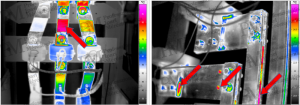
Amennyiben viszont olyan hőhatásokat fedezünk fel a rögzítendő hőképen, melyek reflexió-gyanúsak, akkor változtassuk meg a mérési pozíciónkat, és más megfigyelési szögből ismételjük meg a termográfiai felvételt. Ha változik a vélt tükröződéses hőhatás helye, akkor tényleges tükröződésről van szó. Ilyenkor keresni kell egy „harmadik” megfigyelési irány, hogy a reflexió ne befolyásolja a mérésünket. Ha ez lehetetlen, akkor jegyezzük föl magunknak a reflexió tényét, hogy ezt majd a mérési dokumentálásban feltüntethessük. Ha a pozíciónk, megfigyelési szögünk változtatásának hatására viszont nem változik a hőhatás leképzése a hőképen, akkor valós - tárgyhoz köthető - hőhatásról van szó. A kontaktusok többnyire polírozott felülete miatt a megtévesztő reflexiók mellett a valódi tárgyhőmérsékletek rossz észlelhetősége okoz problémákat. Szerencsére akad általában valamilyen feliratozott, festékjelölésű vagy szigetelt felület, amely a hibahely melegedése révén a villamos vezetők jó hővezető képessége miatt szintén felmelegszik. Áramsínek esetében meglévő furatok is a segítségünkre lehetnek. Amennyiben átmérőjükhöz képest legalább négyszeres mélységgel rendelkeznek, akkor a bennük megvalósuló többszörös reflexiónak köszönhetően ferdén beléjük mérve közel 100%-os emissziós tényezőnek megfelelő sugárzást mérhetünk. Ez természetesen átmenő vagy menetes furatok vagy két áramsín kapcsolódásának szerelési hézaga, légrése esetében is igaz. (5-6. kép)
Egy alá nem becsülendő további probléma pedig a termográfiai mérőeszköz geometriai felbontásával függ össze. Eme téma fontossága miatt szükségesnek vélem, hogy ezt itt bővebben is megemlítsük. Ugyanis lépten-nyomon hallani az egész kapcsolószekrény egy felvétellel történő áttekintő termográfiai felméréséről, majd az ezt követő, az áttekintő hőkép alapján észlelt szükség esetén elvégzett részletező hibahely-felvételről. Ez természetesen nagyon hatékony munkavégzésnek hangzik, ami viszont csak akkor igaz, ha az áttekintő felvétel készítése közben betartottuk a geometriai felbontás követelményét. Ennek megsértése esetében ugyanis észrevétlenek maradnak a kisebb vezetékek és kontaktusok problémáira utaló hőhatások. Igy vélhetően részletező hőképet nem is készítenénk, vagyis pont a hibák nem kerülnének felderítésére. Összefoglalva: az olyan áttekintő termográfiai felvételek készítése, melyeknek geometriai felbontása nem megfelelő, egész egyszerűen nem megengedett és ez alól soha nincs kivétel. Szerencsénkre igen egyszerű a hőkamera (ill. lencséjének) specifikációban mrad szögegységben kifejezett geometriai felbontás (IFOV) számértékkel meghatározni az adott távolságból mérhető legkisebb tárgy dimenzióját. Például az 1,5 mrad geometria felbontás értéke azt jelenti, hogy minden egyes pixelhez rendelt egyedi mérési felület (tárgyfelületen érzékelt mérőfolt) 2 m mérési távolságon éppen 3 mm méretű. Most már csak arról kell gondoskodni, hogy ez a mérőfolt teljes egészében a mérendő tárgyon helyezkedjen el. Ha ugyanis ez nincs betartva, akkor a mérőfolt a tárgy oldalsó környezetének a sugárzását is tartalmazhatja. Mivel a mérőfolton belül átlagolás történik, az oldalsó környezet hőmérsékletének hatására a mérési eredmény már nem képviseli a tárgy valódi hőmérsékletét. Mivel a fentiek alapján meghatározott, egy-egy képponthoz tartozó egyedi mérőfolt helyzete a mérendő tárgyon nem ismert, a matematika segítségére van szükségünk. Ha a legkisebb mérhető tárgy minimális mérete az egyedi mérőfolt kétszerese lenne, akkor két szorosan egymás mellett elhelyezkedő ilyen egyedi mérőfolt közül mindenképpen egy mindig a teljes felületével a tárgyon helyezkedik el. Mivel azonban az érzékelő-mátrix (gyártástechnológiailag szükséges) hézagokkal rendelkezik, valamint méréstechnikailag nem tekinthető leképzési hibáktól mentesnek a lencserendszer sem, a gyakorlatban bevált a fenti képpontméret 3-mal történő szorzása a legkisebb mérhető tárgy minimális méretének meghatározására. Az egyenlet alapján például egy 2 mrad geometriai felbontást nyújtó "standard" objektív esetén 5 m távolságból csak minimum 30 mm méretű tárgyak (vagy tárgyrészletek) hőmérséklete érzékelhető még méréstechnikailag megbízhatóan, korrekten. Kisebb tárgyak méréséhez vagy kisebb mérési távolságot, vagy más optikát kell választani. Kicserélve az előbbi "standard" lencsét egy teleobjektívre, akkor például 0,5 mrad geometriai felbontás feltételezése mellett 5 m távolságból minimum 7,5 mm méretű tárgyak hőmérséklete is mérhető.
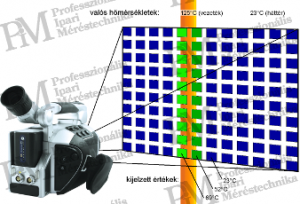
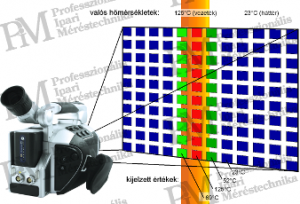
A 1. - 2. ábrák jól mutatják a nem megfelelő geometriai felbontás esetén bekövetkező mérési hibát és annak nagyságát is. Amíg a felső ábrán látható - nagyobb átmérőjű vezeték - tényleges hőmérsékletét észleljük a hőképünkön (kijelzett maximumérték 125°C), az alsó ábra esetében az ugyanolyan forró, de vékonyabb vezeték hőmérsékletét hibásan észleljük (kijelzett maximumérték 69°C). A következő két hőkép a nem-megfelelő geometriai felbontású "áttekintő" felvétel veszélyét alátámasztják egy konkrét gyakorlati példával. Úgy gondolom további magyarázat már nem szükséges. Az 5–6. hőkép a nem megfelelő geometriai felbontású „áttekintő” felvétel veszélyét alátámasztják egy konkrét gyakorlati példával. Amíg a 10. képen látható „áttekintő” felvételen a laza érintkező éppenhogy 38 °C hőmérséklettel jelentkezik, és hibahelyként nem tűnik föl, addig a 11. képen megfelelő geometriai felbontású termográfiai részletfelvétel alapján kiderül, hogy a valódi hőmérséklete már 58 °C fölötti (20 °C mérési hiba)!

Nem egyszerű a helyzetünk a villamos szerelvények burkolatai miatt sem. Mivel akár csak félmilliméteres vastagságú műanyagokon már szinte semmilyen hősugárzás nem jön át, mely a villamos berendezések mérését lehetővé tenne, teljesen nyilvánvaló, hogy a mérendő elemeket eltakaró műanyag burkolatokat mind el kell távolítani a mérés előtt. Ez vonatkozik a biztosíték- és kisautomata-táblák takarólemezeire ugyanúgy, mint az érintésvédelmi, szekrényen belüli plexi burkolatokra egyaránt. Amit azonban a gyakorlatban biztosan nem tudunk eltávolítani, az a korszerű burkolt szerelvények teljesen zárt műanyagtokozása. Szerencsés esetben a szerelvény gyártója hagyott rajta egy kis, 3 ... 4 mm átmérőjű lyukat, melyen keresztül - megfelelő látószögből - a szerelvény hibája vagy rossz érintkezés esetében a belsejében kialakuló kritikus hőmérséklet megfigyelhető. Na persze, a lyukon keresztül történő hibaészlelésnek feltétele, hogy a lyuk méretének eleget tévő geometriai felbontásnak megfelelően válasszuk meg a maximális mérési távolságunkat. (Lásd az előbb tárgyalt problémát.) Ha pedig a burkolaton belüli problémák észleléséhez nincs ilyen furat, akkor már csak a villamos vezető jó hővezetésben bízhatunk. A 12-13. képen látható példák ilyen szempontból eléggé megnyugtatók, mert a legtöbb esetben többnyire egyértelműen összekapcsolható a tokozott berendezés vagy az érintkezés hibája az elmenő vezeték hőmérsékletével, mely a szóban forgó eszköztől távolodva egyre csökken.


Végezetül következzen még egy utolsó figyelem-felhívó példa az érintésvédelmi plexifelületek miatt nem látható hőhatásokra. A példaképen vizuálisan látható, de a letakarás miatt termikusan megfigyelhetetlen laza kontaktus valódi hőmérséklete 57°C. Ez mindenképpen már karbantartási beavatkozást indokolna, ellentétben a még elfogadhatónak tűnő 41°C értékkel szemben. (A fázisok közötti eltérés ennek ellenére már elegendő indok az ellenőrzés és karbantartás szükségességére.)
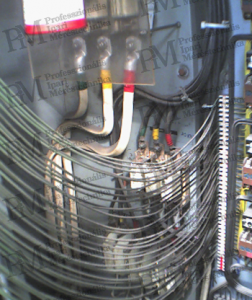

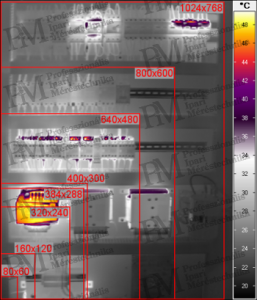
Általánosan dilemmás kérdés, hogy a hőkamera milyen pixelfelbontással (hány képponttal) rendelkezzen. A sokpixeles (valóban) professzionális hőkamerák nagy látómező mellett elegendően jó geometriai felbontással rendelkeznek, így kevés felvétellel felmérhetők és dokumentálhatók a nagyobb kapcsolószekrények is. A gépbekötések vagy műhelyi elosztások szekrényei pedig tipikusan egyetlenegy hőképen rögzíthetők. Viszont a nagyobb képpontszámmal (nagyobb detektorral) rendelkező hőkamerák beruházási költsége is sokkal magasabb. Milyen hőkamera beszerzése felel meg a mérési igényeknek, mely egyben még gazdaságos is? E kérdés eldöntésére több szempont is átgondolandó: 1. milyen gyakran (talán ismétlően) végezzük a méréseket, 2. hány darab és mekkora méretű kapcsolószekrényünk van, és mi a legkisebb megfigyelendő alkatrész vagy vezeték bennük, 3. mit és hogyan kell dokumentálnunk? A kérdésekre adott válaszaink alapján nagyságrendileg felmérhető, hány darab helyszíni felvételre van szükségünk, utána hány hőképet kell kiértékelnünk. Különleges dokumentálási igények esetén talán az egyszerű jegyzőkönyvezésen túl még a hőképek (rengeteg időt felemésztő) montírozása is szükségessé válhat. Egy 1024x768 képpontos hőkamerával (megfelelő távolságból) felmérhető egyetlen egy felvétellel egy maximum 0,5x0,7 m méretű kapcsolószekrény, melyben 2 mm-t meghaladó átmérőjű kábelek találhatók. Ezt referenciának tekintve, a munkaidõigény az 1. táblázatban látható módon becsülhető.
| hőkamera detektorának pixelmérete | 1024 x 768 | 800 x 600 | 640 x 480 | 400 x 300 | 384 x 288 | 320 x 240 | 160 x 120 | 80 x 60 |
| helyszíni adatrögzítési időszükséglet |
1x |
2x |
3x |
8x |
9x |
13x |
54x |
225x |
| jegyzőkönyvezési idő (montázs nélkül) |
1x |
2x |
3x |
8x |
9x |
13x |
54x |
225x |
| hőkép montírozási időszükséglet |
nincs |
1x |
2x |
3x |
5x |
6x |
12x |
96x |
| készülékár (referenciához képest) |
1x |
0,8x |
0,7x |
0,5x |
0,4x |
0,3x |
0,1x |
<0,1x |
1. táblázat: hőkép-pixelszám és munkaszükséglet összefüggése A megfelelő hőkamera kiválasztása ezután a következő logikára alapozható: azt a hőkamerát kell választani, melynek ára a lehetőleg legnagyobb pixelszám mellett az elvégezendő munkavolumen (szekrények mennyisége · mérési gyakorisága · fenti időszorzó) és a rá vonatkozó 3* éves munkadíj szorzatánál éppen még alacsonyabb. (3 év a hőkamerák jelenlegi műszaki avulási idejének fele. Ez nem egyenlő a készülékek tipikus élettartamával.) Lényegesen drágábbat választani pocsékolás, az „olcsóbbak” pedig túlzott munkadíj-kiadást eredményeznének. A fenti gondolatmenettel kiválasztott hőkamera a harmadik évtől kezdve tiszta nyereséget produkál a kisebb pixelszámú versenytársaival szemben.
Szintén nem szőnyeg alá söpörhető műszaki paraméter a képrögzítési / képfrissítési frekvencia sem. Az elterjedt mikrobolométeres hőkamerák a képfelvételi frekvencia széles tartományát fedik le. Általában különbséget teszünk a lassú 9 ... 15 Hz, valamint a gyorsabb 50 ... 60 Hz, ill. max. 240 Hz képfrissítésű hőkamerák között. (Vannak még gyorsabb - akár 9 kHz - képfelvételi frekvenciát is biztosító hőkamerák is, melyek viszont e sebesség elérése érdekében fotondetektorokkal rendelkeznek.) Kevés kivétellel a termikus folyamatok rendszerint nagy időállandóval rendelkeznek, és ha a tárgy nem mozog, fenti (bolométerrel elérhető) képfrekvenciák bőségesen elégségesek. Vannak azonban nagyon gyors (tranziens) hőmérséklet-folyamatok illetve gyorsan mozgó mérési tárgyak, melyek rögzítéséhez lényegesen magasabb képfrekvenciák szükségesek. Például egy villamos berendezés bekapcsolás alatti melegedési folyamatának vagy egy szakaszoló terhelés alatti bontás ívoltás során fellépő hőmérsékleteknek rögzítéséhez akár több kHz-es képfrissítések is szükségessé válhatnak. Akkor lehetnek komoly problémák, ha kézben tartott hőkamerával kívánunk kellőképpen részletes hőképeket vagy akár nagyobb távolságú méréseket készíteni. A fényképezéssel kapcsolatosan ismert tény, hogy egy nyugodt kezű fényképész még 1/60-as zársebesség mellett is képes bemozdulás nélküli fényképek készítésére (állvány nélkül). Egy "amatőr" bizonytalan keze pedig 1/125-ös zársebesség mellett is időnként bemozdult képeket eredményezhet. Ezek a zársebességek 17 ms ill. 8 ms érzékelési időt jelentenek. Mi ügyesség kell akkor ahhoz, hogy egy csak 9 Hz-es hőkamerával kézben tartva bemozdulatlan hőképeket rögzítsünk! Ehhez akár 30 ... 40 ms-on keresztül mozdulatlanul kellene tartanunk a hőkamerát! Más szóval: kézben tartva csak olyan hőkamerákkal lehet biztonságosan bemozdulás-nélküli hőképeket készíteni, melyek integrálási idejük 15 ms-nál rövidebb, tehát képfrissítése 50 Hz vagy gyorsabb.
Gyakran felmerül a kérdés, hol kell azt a határt meghúzni, hogy az észlelt melegedés hibásnak számítson, vagy akár már veszélyesnek is. Elsősorban akkor nehéz a kérdés eldöntése, ha a maximális terhelésnél jóval kisebb áramerősség mellett történt a termográfiai felmérés. Alapvetően e probléma elkerülése végett is érdemes elfogadni, hogy villamos berendezéseken termográfiai állapotfelméréseket csak a névleges terhelés legalább 50%-ának megléte esetén szabad elvégezni. Kizárólag igen durva hibák fedezhetők föl a csak 30%-os terhelés mellett. Elfogadott határértékek ill. döntési szabályok (min. 75%-os terhelés mellett): Általános határértékek a környezeti hőmérséklethez képest Melegedés 20 K ... 40 K: ellenőrizendő Melegedés 40 K ... 60 K: sürgősen ellenőrizendő Melegedés >60 K: kritikus Határértékek fázisok közötti különbségre Eltérés 5 K ... 20 K: ellenőrizendő Eltérés 20 K ... 40 K: sürgősen ellenőrizendő Eltérés >40 K: kritikus (** a fázisok között) Határértékek szigetelő anyagtól függően: Gumi-szigetelésű kábelek: max. 60°C PVC-szigetelésű kábelek: max. 70°C Szilikon szigetelésű kábelek: max. 180°C Egyéb határértékek: Villanymotorok (hűtőbordain mérve): típustól és hűtési körülményektől függően „A” hőállóságú szigetelési osztály max. 60 ... 80°C „B” hőállóságú szigetelési osztály max. 95 ... 105°C „F” hőállóságú szigetelési osztály max. 115 ... 125°C „H” hőállóságú szigetelési osztály max. 140 ... 150°C Műanyagburkolatok: anyagtól függően: max. 50 ... 75°C Mágneskapcsolók: tipikusan max. 85°C Transzformátorok: tipikusan max. 85°C Villamos szekrények belseje (IEC/EN 60947-3): max. 35°C Áramsínek (DIN 43671): max. 65°C Külső fémes érintkező (IEC/EN 60947-3): 80 K (környezethez képest) Szigetelt érintkező (IEC/EN 60947-3): 70 K (környezethez képest) Megjegyzés: Kisebb terhelés mellett az összes fenti értéknél alacsonyabb határok érvényesek.
A melegedés a bevizsgált villamos eszköz (kábel, sín stb.) vagy érintkező átmeneti ellenállása miatt fellépő, hő formájában keletkező energiavesztesség miatt alakul ki. Az eszköz pedig leadja ezt a teljesítményt hősugárzással, konvekcióval (a levegő felé), valamint hővezetéssel a hozzá csatlakozó elemek felé. A mérési időpontnál nagyobb terhelés (akár áram, akár feszültség) esetén várható melegedést első sorban a szóban forgó eszköz (vagy kontaktus) terhelés- és hőmérsékletfüggő ellenállás-változása befolyásolja. Viszont az ugyanakkor fellépő - várhatóan erősödő - hővezetés, hősugárzás és konvekciós hőleadás is hatással van a folyamatra. A bekövetkező melegedést ennek megfelelően csak nagyon komplex matematikai összefüggésekkel lehetne pontosan meghatározni. Állandósult állapotban egy (végtelen hosszúnak feltételezett) sínben vagy vezetékben a várható hőmérséklet a tárgy és a környezeti hőmérsékletétől, a feszültségtől és az áramtól, de sok anyagjellemzőtől is függ. Az utóbbiak az áramkiszorítási tényező (hőmérsékletfüggő), az anyagspecifikus ellenállása (hőmérsékletfüggő), a sugárzásalapú hőátadási tényező, a konvekciós hőátadási tényező, valamint a vezeték vagy sín keresztmetszete. A mindezt magában foglaló egyenlet a gyakorlati alkalmazáshoz – a nehezen hozzáférhető anyagjellemzők miatt különösön – eléggé bonyolult, javasoljuk helyette a következő becslést alkalmazni. Egyszerűsített melegedés-becslés névleges terhelés esetére Ha feltételezzük, hogy a méréskori terhelés és a névleges terhelés állapot között olyan kicsi hőmérséklet növekedés lép föl, hogy az anyagspecifikus ellenállás hőmérsékleti változása (növekvése) elhanyagolható, továbbá sem az áramkiszorítási tényező, sem a hőátadási tényezők nem változnak számottevően a megfigyelt eszköz hőmérséklet növekedése révén, akkor az előbbi egyenletben mindezek a tényezők állandónak tekinthetők. (Ez néhány tíz °C-os hőmérséklet-emelkedés esetén alkalmazható. Nagyobb változásnál viszont ezek az egyszerűsítések nem érvényesek, tehát lenti egyenletek nem alkalmazhatók.) A fenti egyszerűsítések alkalmazásával a következő egyenletet kapunk:
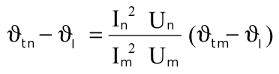
Ahol: θtn ... tárgy becsült hőmérséklete névleges terhelés mellett θtm ... tárgy hőmérséklete a termográfiai mérés időpontjában θl ... környezeti levegő-hőmérséklet (állandónak feltételezett) Um ... feszültség a termográfiai mérés időpontjában Im ... áram a termográfiai mérés időpontjában Un ... névleges feszültség In ... névleges áram Hálózati berendezések esetén (állandó feszültségszint mellett) pedig a várható abszolút hőmérsékletek becslésére használhatjuk:

Az így becsült hőmérsékletek ezután az előző oldalon felsorolt határértékekkel összehasonlíthatók. Hálózati eszközök esetén Um és Un állandó, tehát a tárgyhőmérséklet villamosan már csak az I²-arányától függ.
Termográfiai példafelvételek terhelésfüggően melegedő vezetékre és villamos kötésekre
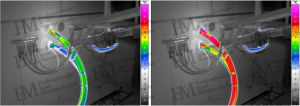
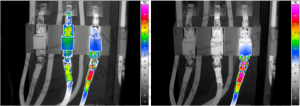
Termográfiai példafelvételek kontaktushibákra / laza kötésekre (nagy teljesítményű elemek)
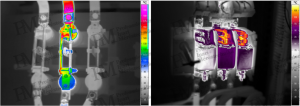

Termográfiai példafelvételek kontaktushibákra / laza kötésekre (kis teljesítményű eszközök)
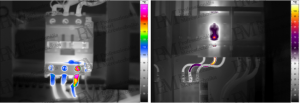
Termográfiai példafelvételek kontaktushibákra / laza kötésekre (sorkapcsok, biztosítékok)
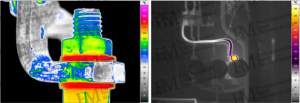
Termográfiai példafelvételek eltérő fázisterhelésre
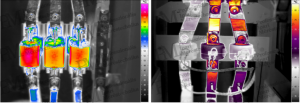
Termográfiai példafelvételek alulméretezett villamos berendezésekre
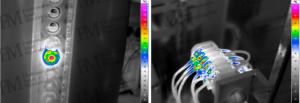
Termográfiai példafelvételek alulméretezett villamos vezetékekre

Termográfiai példafelvételek kábelsaru/kábelvéghüvely hibákra
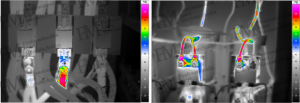
Termográfiai példafelvételek villamos forgógépek és transzformátorra

Amennyiben távvezetékek felméréséről van szó, akkor a kültéri mérésekre vonatkozó korlátokon túl méréstechnikai szempontból kritikus a geometriai felbontás is. A 30 m magasságban lévő, akár csak 18 mm átmérőjű sodronyok túlterhelésének és kötéseik átmeneti ellenállása növekedésének beméréséhez 0,2 mrad, vagy még jobb, geometriai felbontás, tehát nagy „optikai nagyítású” teleobjektív szükséges. Csupán a szigetelők egyes hibái ennél gyengébb geometriai felbontás mellett is még megtalálhatóak. A következő hőképek mind a mérési napszak, mind a látható geometriai felbontás miatt termográfiai értékelésre alkalmatlanok. Függetlenül attól, hogy a földről vagy a levegőből (helikopterrel, repülőgéppel vagy dronnal) készültek. (Ezek a példák sajnos a jelenleg végzett távvezeték-felmérések többségére jellemzők, alig akadt korrekt mérés a publikációk és reklámkiadványok között!) Termográfiai példafelvételek villamos távvezetékek hibaira
![balra: távvezeték hibával [forrás: Infratec]; jobbra: drónos részlet ([Workswell] alapján)](/images/4024/mee12-300x103.png)
A termográfia egyik legfiatalabb, de vélhetően nagyon gyorsan növekvő jelentőségű alkalmazása feltételezhetően a napcellák gyártás közbeni minőség-ellenőrzése és a telepített modulok vagy akár teljes napcellás erőművek állapotfelmérése. Amíg például az U-I jelleggörbés ellenőrzések jól kimutatják, hogy baj van és romlik a hatásfok, a hibahelyek és hibatípusok többnyire ezen az úton nem deríthetők fel, modulokra bontva semmiképpen sem. A termográfia ezzel szemben, megfelelő kivitelezést feltételezve, lokalizálhatja a hibahelyeket és többféle, egymástól eltérő hibajelenséget is megkülönböztethet. Főleg a nagy napcella-parkok esetében ezzel lehetővé válik a hatékony üzemeltetés és gazdaságos karbantartás. A napcellás rendszerek ellenőrzése esetén a villamos berendezések felméréséhez alkalmazott értékelési sablonok és határértékek a bekötésekre, kábelezésre, elosztókra/gyűjtőkre, szabályozókra és konverterekre érvényesek. Azonban maga a napcellákra, modulokra nem érvényesíthetők ezek. Jelen fejezetben ezért kifejezetten a napcellákhoz szükséges elméleti háttérrel és gyakorlati tudnivalókkal foglalkozunk. Napcellás mérésekről általánosan A legnagyobb különbség az eddig bemutatott termográfiai alkalmazásokhoz képest az a körülmény, hogy intenzív napsütés szükséges a kültéri mérés végzéséhez. Ez teljesen ellentétes azzal, hogy szinte minden más termográfiai alkalmazás során hangsúlyozzuk, napsütésben és főleg a mérendő tárgy közvetlen napbesugárzása esetén ne végezzük termográfiai méréseket. Ezt a napsütés reflexiója, illetve a tárgy felhevülése miatt kerüljük el. A napcellás rendszerek bevizsgálása esetében viszont pont a napbesugárzás szükséges ahhoz, hogy a hibajelenségek okozta hőmérséklet-eltérések megjelenjenek. Azok észlelését pedig a napsugárzás üvegfelületi tükröződése nehezíti, mely csak gondosan megválasztott megfigyelési szöggel ellensúlyozható. Szokásos alkalmazási feltételek, mérési körülmények • üzemelő napcellás rendszer energiatermelési üzemállapotban • minimum 600 W/m2 folyamatos napbesugárzás • maximális 2/8 Cumulus felhőzet, gyenge gomolyfelhő • eső- és hómentesség, a cellákon nem lehet víz vagy hó • legfeljebb 4 Beaufort (20 ... 29 km/h) szélerősség (= mérsékelt szél) • megfelelő látószög és geometriai felbontás biztosítása • nagyobb rendszerek fényképes és GPS-koordinátás dokumentálás biztosítása Termográfiai úton megtalálható hibák
Nagy kiterjedésű szolárrendszerek termográfiai felmérése drónokkal A bevezetésben felsorolt mérések jellege, a velük kapcsolatos felvételek mennyisége, valamint a látómezővel és látószöggel kapcsolatos nehézségek kifejezetten a légi termográfia alkalmazására késztetnek. Tipikusnak mondható a repülőgépről vagy helikopterről történő termográfiai felmérés a környezetvédelemben, környezetfigyelésben (akár vízgazdálkodás, növénytermesztés vagy vadszámlálás szempontjából), a nagy területű régészeti és geológiai kutatásokban. Egyre inkább elterjedt a szolárrendszerek, első sorban a nagy kiterjedésű, több hektáros fotovoltaikus erőművek légi felmérése is, amihez az egyre nagyobb teherbírású és könnyebben alkalmazható, akár automatizálható küldetésű drónok megjelenése ad lehetőséget. (Természetesen eközben ne felejtsük el, hogy a drónok alkalmazására szigorú előírások, törvényi szabályozások vonatkoznak, amelyeken felül további műszaki és jogi kockázat is felmerülhet.)

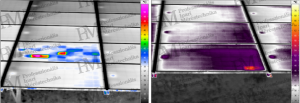
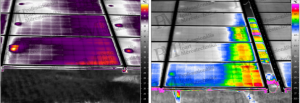
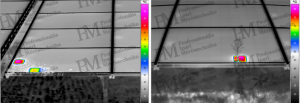
Megfelelő felbontású hőkamera és korrekt paraméterbeállítással (mérési gyakoriság, megfigyelési látószög, valamint repülési magasság és sebesség) a következő ábrán bemutatott minőségű (eredményesen kiértékelhető) hőképek nyerhetők. A követelmények és paraméterek összetettsége (és egymásra való hatása) olyan sokrétegű, hogy ennek megtárgyalása jelen előadás (ill. cikk) keretében sajnos nem lehetséges.

Termográfiai példafelvételek fotovoltaikus rendszerek hibáira

A (rövidített) szöveg és a hőképek forrása: Rahne Eric: TERMOGRÁFIA - elmélet és gyakorlati méréstechnika 656 oldal (A4, színes), 303 ábra, 452 kép, 754 hőkép, 50 táblázat ISBN 978-963-87401-6-8 (nyomtatott könyv, nincs elektronikai kiadás) Bővebb tájékoztatás: www.termokamera.hu Rahne Eric (PIM Kft.) pim-kft.hu, termokamera.hu
A publikáció tartalmát szerzői jogok védik, ennek (akár csak részben történő) felhasználása, elektronikus vagy nyomtatott tovább-publikálása csak a forrás és a szerző nevének feltüntetése mellett, valamint a szerző előzetes írásos engedélyének megléte esetén megengedett. A szerzői jogok (Copyright) megsértése jogi következményekkel jár.
Copyright © PIM Professzionális Ipari Méréstechnika Kft.
2026 | Minden jog fenntartva
Impresszum | Adatkezelés